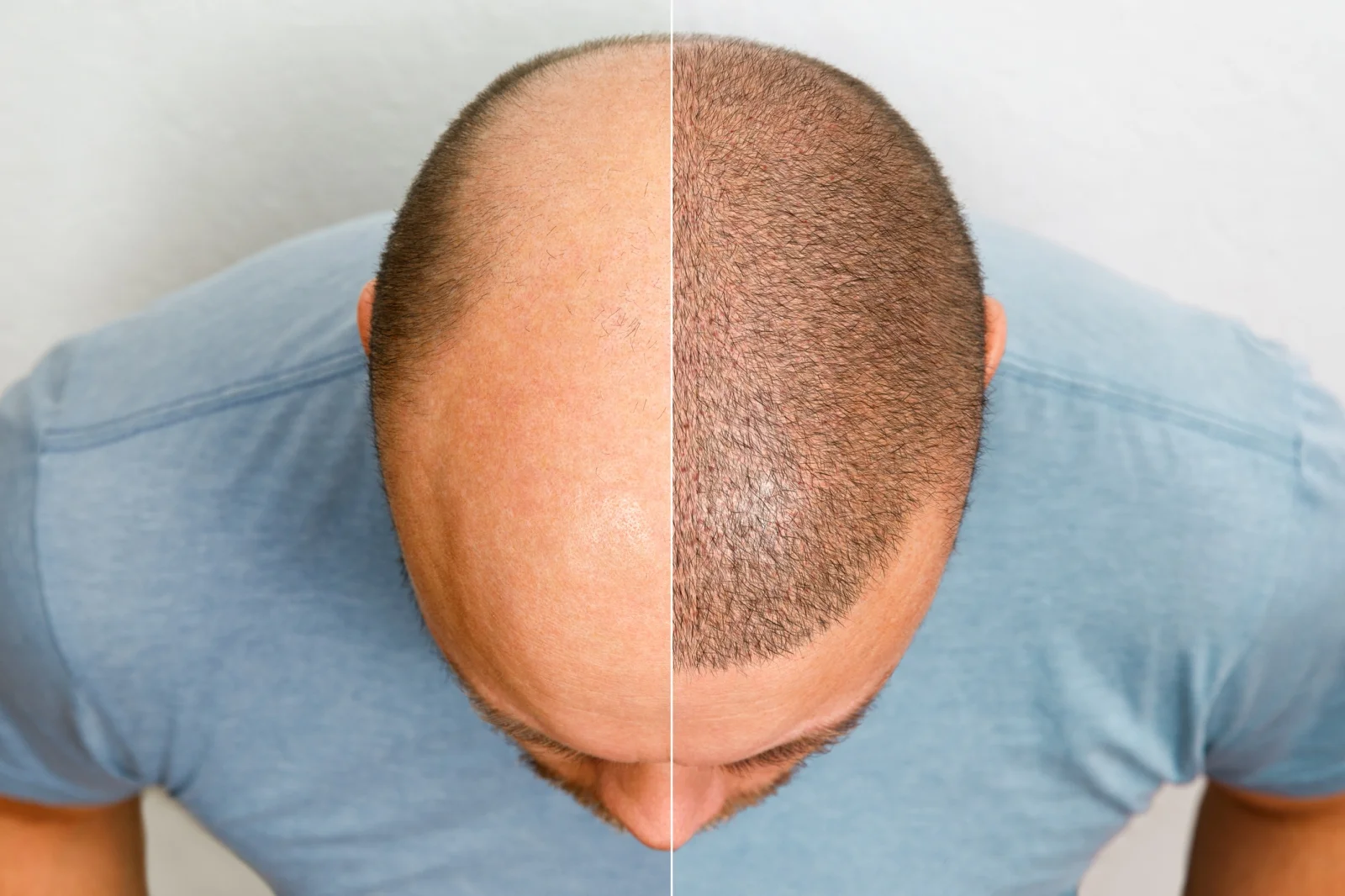
Assessment: During the initial consultation, the doctor assesses the patient’s hair loss status and general health. A detailed discussion is held regarding the patient’s expectations and treatment options.
Preparation: In the pre-treatment preparation phase, the patient’s general health is assessed and a treatment plan is determined. It is recommended to pay attention to factors such as smoking and alcohol use before surgery.
Hair Transplantation: Hair transplantation is generally performed under local anesthesia. There are two main hair transplantation techniques:
FUE (Follicular Unit Extraction): Hair follicles are individually extracted from the donor area of the head and transplanted to the recipient area.
FUT (Follicular Unit Transplantation): A strip of tissue is removed from the donor area, and hair follicles are extracted from this strip and transplanted to the recipient area.
Hair Treatment: Various treatment methods can be applied to stop hair loss and strengthen existing hair:
PRP (Platelet Rich Plasma): Stimulating hair growth by injecting plasma obtained from the patient’s own blood into the hair follicles.
Laser Therapy: Stimulating hair follicles and promoting hair growth using low-level laser light.
Medical Treatments: Stopping hair loss and promoting hair growth with medications such as minoxidil and finasteride.