Assessment: During the initial consultation, the doctor assesses the skin’s structure and any issues requiring treatment. A detailed discussion is held regarding the patient’s expectations and treatment options.
Preparation: In the pre-treatment preparation phase, the appropriate chemical peeling solution is selected, taking into account the patient’s skin type and condition. Skin care and sun protection recommendations are provided.
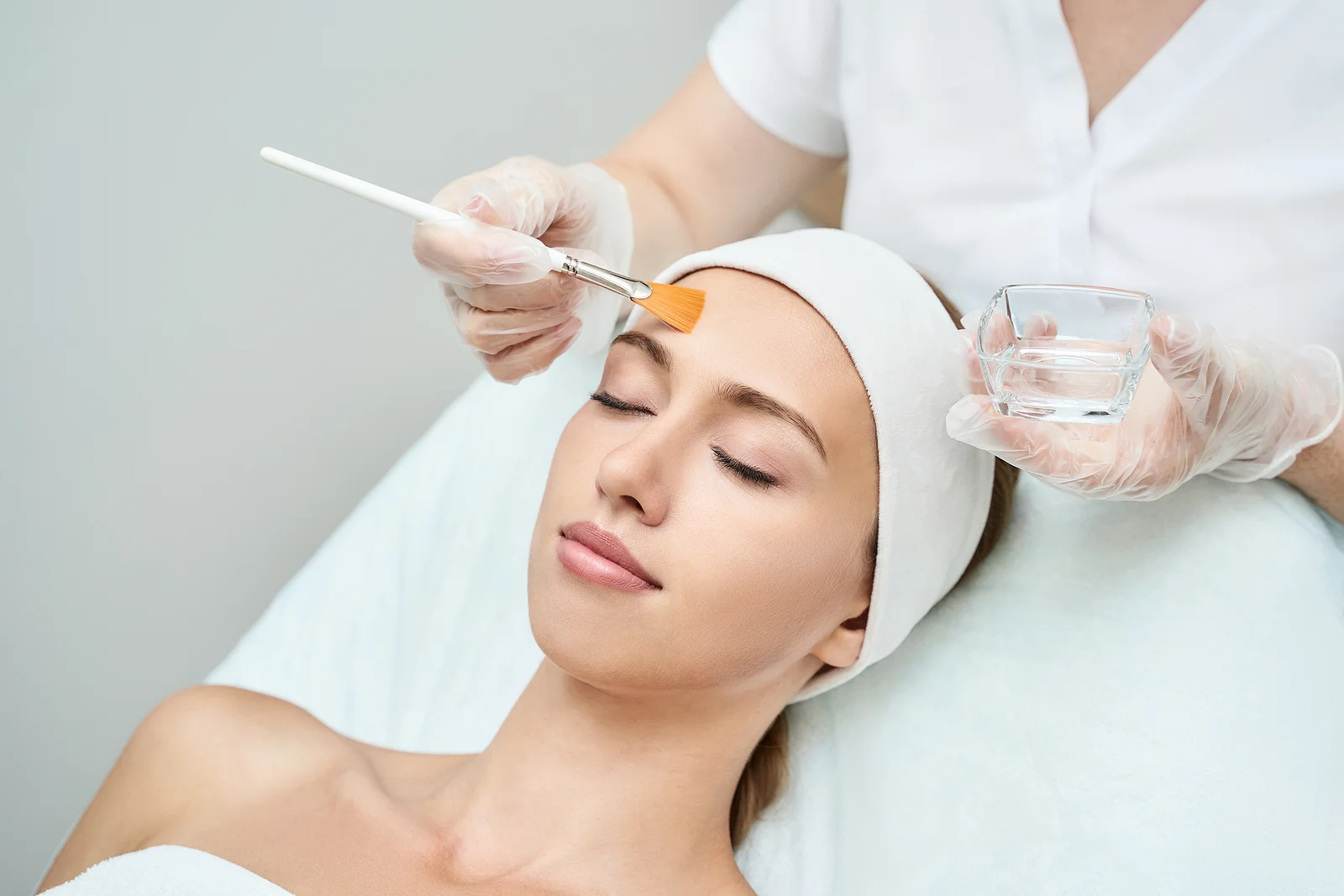
Chemical Peeling: Chemical peeling is generally a non-invasive procedure that does not require local anesthesia. The selected chemical solution is applied to the upper layer of the skin and left for a specific period. During this process, the top layer of skin peels off, revealing the fresh skin underneath.
Healing Process: The healing process after a chemical peel can vary from person to person. Redness, peeling, and mild discomfort may occur in the first few days. As the skin heals, a new and healthy layer of skin forms. Following skin care and sun protection recommendations during the healing process is important.